
A board is whatever you put on it
There is no fixed template and no given start page. Every card is a window into one service, dropped on a free grid and sized by hand. What it becomes is decided by the question you ask yourself every morning.
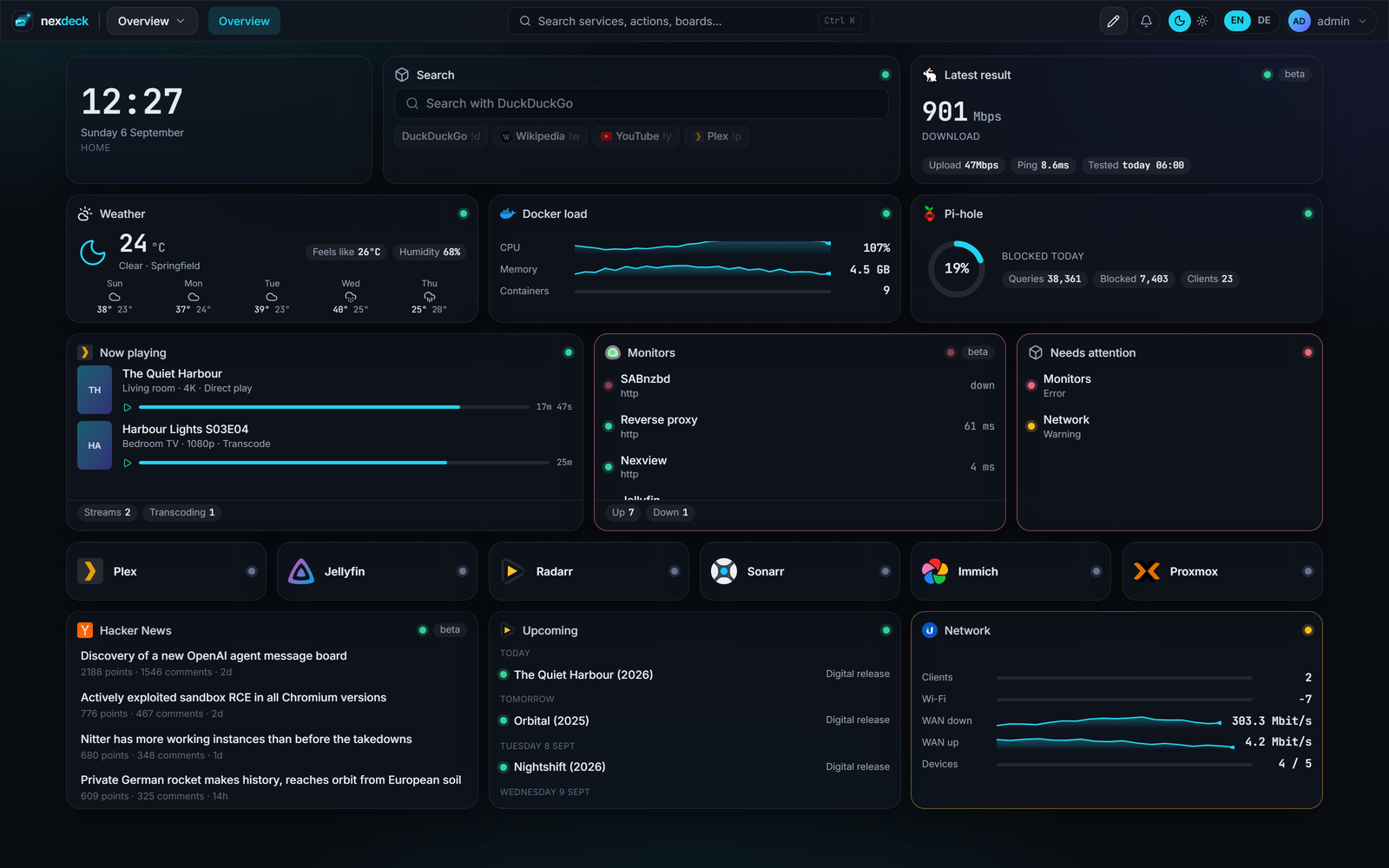
Four pages, four questions
How a board comes about, what happens when something turns red, where you look at it, and how several people share it.
Boards and cards
How a board comes about: a free grid, sizes by hand, live numbers with history, a preview while you are still setting it up.
- Free placement
- Sparklines
- Ctrl+K
- Your own colour
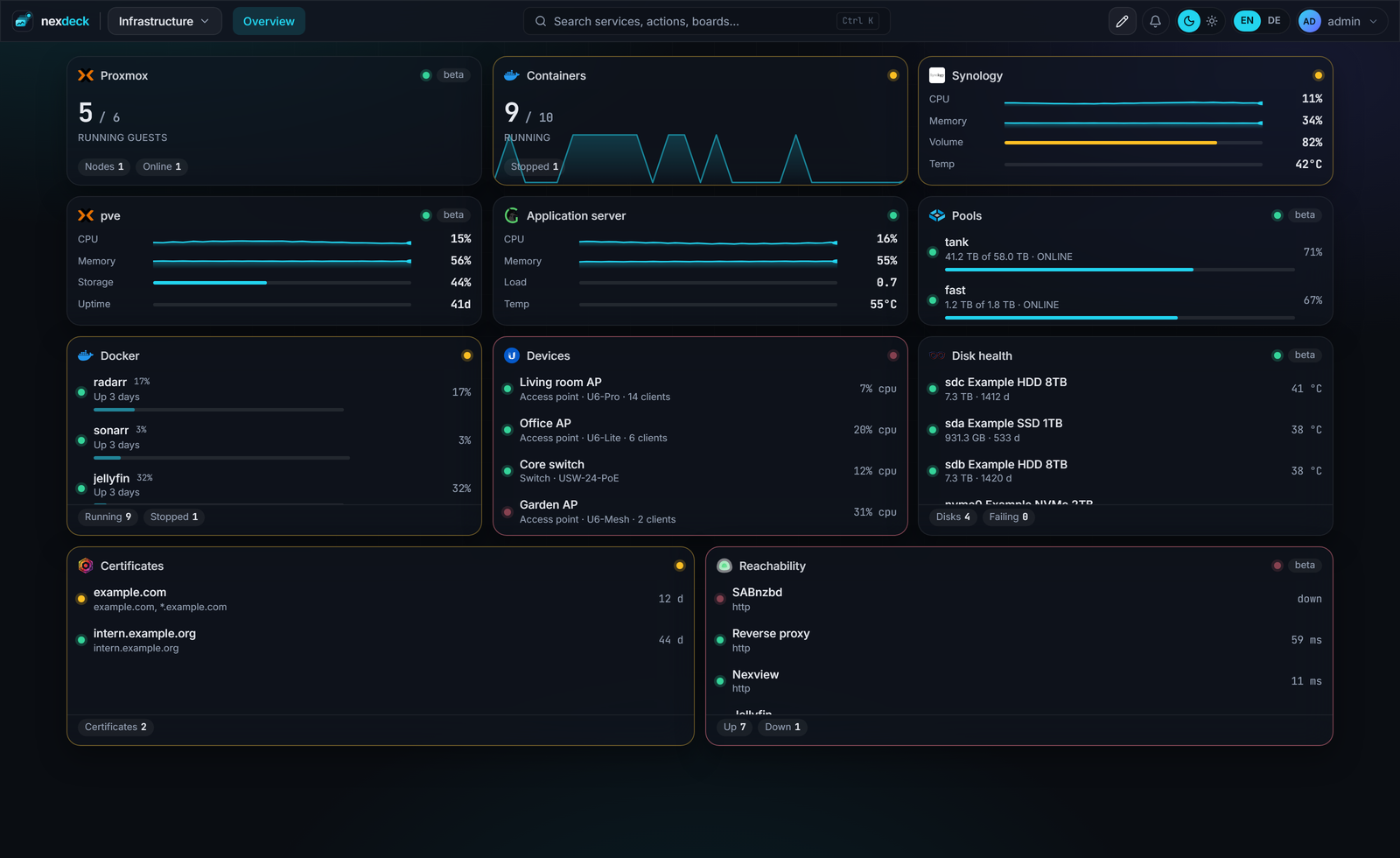 Acting on it
What happens when something is red: actions on the card, reachability over time, a message on eight different roads.
Acting on it
What happens when something is red: actions on the card, reachability over time, a message on eight different roads.
- Restart
- Wake
- Approve
- Notify
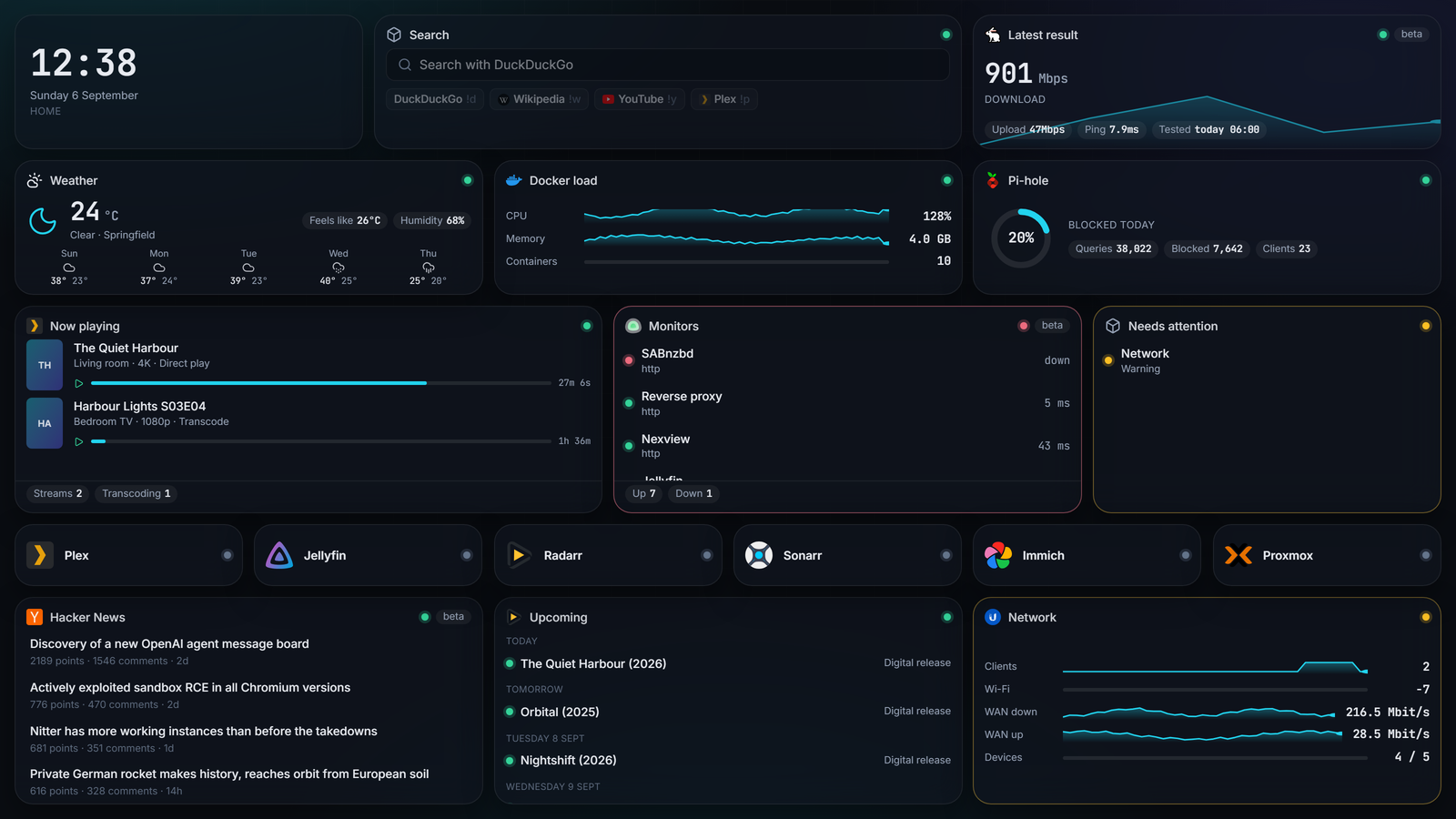 Three screens
Where you look at it: at the desk, as an app on the phone, as a wall display without a sign-in.
Three screens
Where you look at it: at the desk, as an app on the phone, as a wall display without a sign-in.
- Per screen size
- Installable
- Kiosk
- Night dimming
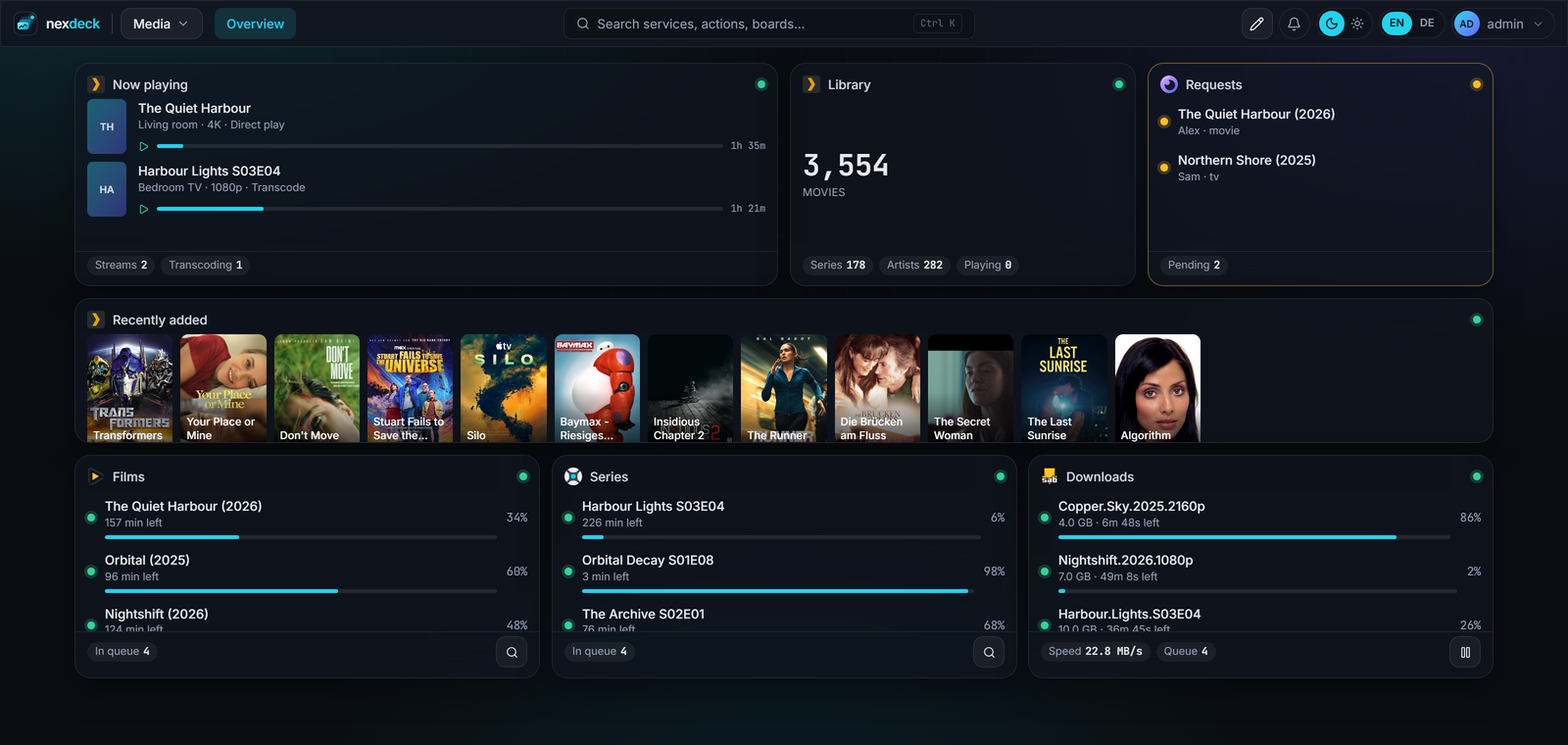 Running it
How several people share it: roles, shared boards, OpenID Connect sign-in, boards as files.
Running it
How several people share it: roles, shared boards, OpenID Connect sign-in, boards as files.
- Roles
- Sharing
- OIDC
- YAML
The server asks, not the browser
Every integration has its own rhythm. The server collects once, stores it, and pushes each change on to every open browser. A second monitor, a phone in the kitchen and a tablet in the hallway together cost the service behind it as much as a single tab.
Anything countable is condensed along the way and sits on the card as a sparkline over 24 hours. No cache beside it, no second database: nexdeck is one container.
The reverse proxy has to leave the connection open. nexdeck pushes over Server-Sent Events. Traefik and Caddy handle that out of the box; nginx needs proxy_buffering off; on the location. It is on the install page as well.